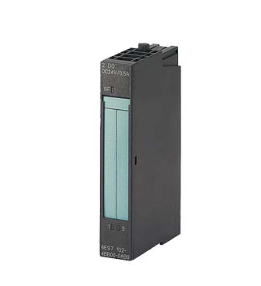
Siemens 6ES7531-7KF00-0AB0 PLC Module
Siemens 6ES7531-7KF00-0AB0 PLC Module
Couldn't load pickup availability
The Siemens 6ES7 Series Is Not a Single Product but a Common Order-Number Prefix for the Siemens SIMATIC S7 Series PLCs (Programmable Logic Controllers) and Their Related Modules. It covers products ranging from the classic S7-300/400 to the mainstream S7-1200/1500, as well as ET 200 distributed I/O and many other products, and is the core identifier of Siemens' industrial automation product family.
?? Meaning of the Order Number (6ES7) Coding
The 6ES7 order number uses a structured coding scheme. Taking 6ES7 321-1BH01-0XA0 as an example, the common meanings of its key fields are as follows:
| Field Position | Example Fragment | Common Meaning |
|---|---|---|
| Prefix | 6ES7 |
Descriptor for Siemens S7 series PLC modules |
| Product Series |
3 (in 321)
|
Represents the S7-300 series. Other common ones include: 2 for S7-200, 4 for S7-400, 5 for S7-1500
|
| Module Type |
2 (in 321)
|
Represents a digital module. Other common types include: 1 for CPU, 3 for analog modules, 4 for communication modules, 5 for function modules
|
| Input/Output |
1 (in 321)
|
For digital modules, 1 represents input, 2 represents output, 3 represents mixed input/output
|
| Functional Level/Points | 1BH |
The coding is complex and includes information such as the number of points, voltage level, and output type (e.g., transistor/relay). For example, B often represents transistor output, and H may correspond to 16 points
|
| Version/Suffix |
01 / 0XA0
|
01 usually refers to the hardware/firmware version; the suffix is used to describe production details or special functions
|
Please note: The above coding rules mainly apply to the classic S7-300/400 series. For the newer S7-1200/1500 series, although their model designations (e.g.,
CPU 1511-1 PN) and order numbers (e.g.,6ES7 511-1AK00-0AB0) follow a similar logic, the specific field meanings may have evolved.
?? Main Product Families Covered by the 6ES7 Series
The 6ES7 series covers multiple generations of Siemens PLC products, meeting the full range of requirements from basic control to high-performance and high-availability applications.
Classic Series (S7-200/300/400)
-
S7-200: An early micro PLC, now largely replaced by the S7-1200. Its module order numbers usually contain
2, for example,6ES7 221-...represents a digital input module. -
S7-300: A classic mid-range modular PLC, widely used in manufacturing. The order numbers of its CPUs and modules usually contain
3, for example,6ES7 314-...is a CPU, and6ES7 321-...is a digital input module. -
S7-400: A large PLC for high-performance, redundant control process automation. Its order numbers usually contain
4, for example,6ES7 412-3HJ14-0AB0is a high-availability CPU.
Mainstream Series (S7-1200/1500)
-
S7-1200: A compact controller suitable for small and medium-sized automation applications. Module order numbers often contain
2, for example,6ES7 223-1BH32-0XB0is a digital I/O module, and6ES7 231-4HD32-0XB0is an analog input module. -
S7-1500: A new-generation high-performance controller and the current mainstream. The order numbers of its CPUs and modules usually contain
5, for example,6ES7 511-1AK01-0AB0(CPU 1511-1 PN) and6ES7 531-7QF00-0AB0(analog input module).
Distributed I/O and Function Modules
-
ET 200 Series: Distributed I/O systems, including ET 200SP, ET 200MP, etc., used to directly acquire and execute signals in the field. Their interface modules and I/O modules also use 6ES7 order numbers, for example,
6ES7 155-6AU00-0AB0(ET 200SP interface module) and6ES7 131-6BF01-0AA0(ET 200SP DI module). -
Function Modules (FM/TM): Used to implement special technology functions such as counting and positioning. For example,
6ES7 350-1AH03-0AE0is the FM 350-1 counter module, and6ES7 550-1AA00-0AB0is the TM Count 2x24V technology module.
?? Key Selection Point: Functional Classes of I/O Modules
When selecting I/O modules for systems such as ET 200SP or S7-1500, you may see the same functional module available in different models such as BA, ST, HF, and HS. These represent the module's functional class, which directly affects its performance, diagnostic capability, and cost.
| Class | Full Name | Core Features | Suitable Scenarios |
|---|---|---|---|
| BA | Basic | Implements only basic functions, with limited diagnostic capability (e.g., can only diagnose "no supply voltage"). Lowest cost | Simple signal acquisition that is cost-sensitive and requires no complex diagnostics. |
| ST | Standard | Functions are standard configuration, with module-level diagnostics (e.g., wire break, short circuit), but diagnostic information applies to the entire module | Most routine applications, providing basic troubleshooting capability. |
| HF | High Feature | Supports channel-level diagnostics; parameters and diagnostics can be set independently for each channel, and it usually also supports advanced functions such as hardware interrupts | Occasions requiring precise fault localization, high availability, or complex control logic. |
| HS | High Speed | Optimized for high-speed signal processing, with capabilities such as high-speed counting and oversampling | Connecting high-speed pulse signals (e.g., encoders) for precise positioning or high-frequency counting. |
Share